

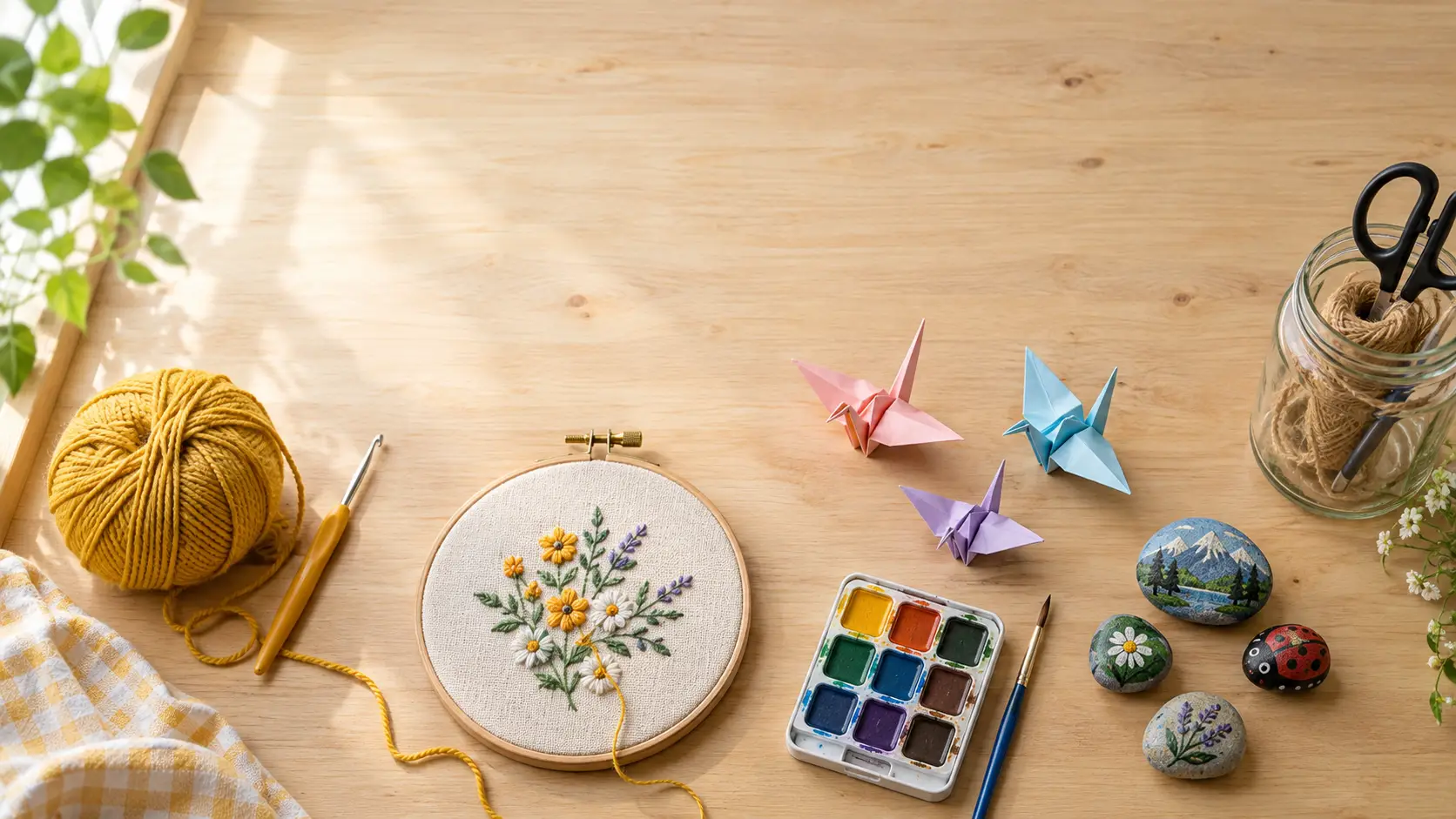

Quick answer: To start a craft hobby on a budget, pick one craft, buy only a starter kit or the three to five basic supplies it needs, and learn from free tutorials. Paper crafts, embroidery, crochet, and upcycling are among the cheapest to begin with, and most need less than a small bag of groceries’ worth of materials.
Quick facts
| Starting cost | Free to about $25 for most crafts on this list |
| Difficulty | Beginner |
| Time to first project | 30 minutes to a weekend |
| What you need | A flat surface, basic supplies, and a free tutorial |
Why do crafts feel so expensive at first?
Most of the cost comes from buying too much too early. Craft stores sell large sets, and it is easy to leave with supplies for three hobbies you have not tried. A better approach is to choose one craft, make one small project, and only then decide what to buy next.
What should you buy before your first project?
Start with the smallest set that lets you finish something. For most crafts that means one tool, one material, and a pattern or tutorial. Check what you already own first. Scissors, glue, old jars, fabric scraps, and cardboard cover a surprising number of beginner projects.
15 budget-friendly craft hobbies for beginners
1. Origami
All you need is paper. Printer paper works for practice, and a pack of square origami paper is cheap once you want cleaner folds. Start with a crane or a simple box.
2. Bullet journaling
A basic notebook and one pen are enough. Fancy layouts can wait. Many people find that a plain monthly spread is the version they keep using.
3. Hand embroidery
A hoop, a few skeins of floss, a needle, and a piece of cotton fabric will get you through your first several projects. Learn backstitch and satin stitch first.
4. Crochet
One hook and one skein of medium-weight yarn are enough for a dishcloth or a small square. Crochet tends to be forgiving, since a mistake means pulling out a loop instead of unpicking a tight knit stitch.
5. Basic knitting
Needles and yarn are the whole kit. A garter-stitch scarf teaches you casting on, knitting, and binding off, and it hides beginner mistakes well.
6. Upcycling old clothes
A worn T-shirt can become a tote bag, a headband, or a set of cleaning rags. You pay nothing for the material, so mistakes cost you nothing either.
7. Glass jar crafts
Wash and save jars from your kitchen. With paint, twine, or fabric scraps, they become vases, pen holders, or candle holders.
8. Painted rocks
Smooth stones, a few acrylic paints, and a cheap brush are enough. It works well as a first painting hobby because small pieces feel low pressure.
9. Watercolor sketching
A small pan set, one round brush, and watercolor paper cover the basics. Skip the big sets. Fewer colors teach you mixing faster.
10. Handmade cards
Cardstock, glue, and scissors will do. A handmade card also gives the craft an immediate use, which helps you keep going.
11. Macramé
Cotton cord and a wooden dowel or branch make a wall hanging or plant holder. You learn a few knots and repeat them.
12. Air-dry clay
No kiln or oven is needed. Make trinket dishes, ornaments, or small figures, then paint them once dry. A single block of clay goes a long way.
13. Natural fabric dyeing
Onion skins, avocado pits, and tea can all dye cotton in soft colors. You use leftovers from the kitchen, and each batch turns out a little different.
14. Simple woodworking
Pick up one handsaw, sandpaper, and wood glue, and ask a lumber yard about cut-off scraps, which are often sold cheap. A small shelf or a planter box is a realistic first build.
15. Terrariums
A glass container, gravel, soil, and a couple of small plants are all it takes. It sits somewhere between crafting and gardening, and the finished piece doubles as home décor.
How do you choose the right craft?
Ask yourself three questions. Do you like working with your hands in a repetitive way, as in knitting or macramé, or do you prefer quick, varied projects like cards and painted rocks? Do you have a spot where a half-finished project can sit? And do you want something to use or give away, or something purely for relaxation? Your answers usually point to one or two crafts from the list.
How can you save money as you keep going?
- Buy in small amounts and reorder only what you actually used up.
- Check thrift shops, community groups, and neighbors. People give away yarn, fabric, and tools often.
- Use free tutorials on YouTube and your local library’s craft books before paying for a course.
- Set a monthly craft budget so a hobby stays a pleasure and not a source of guilt.